
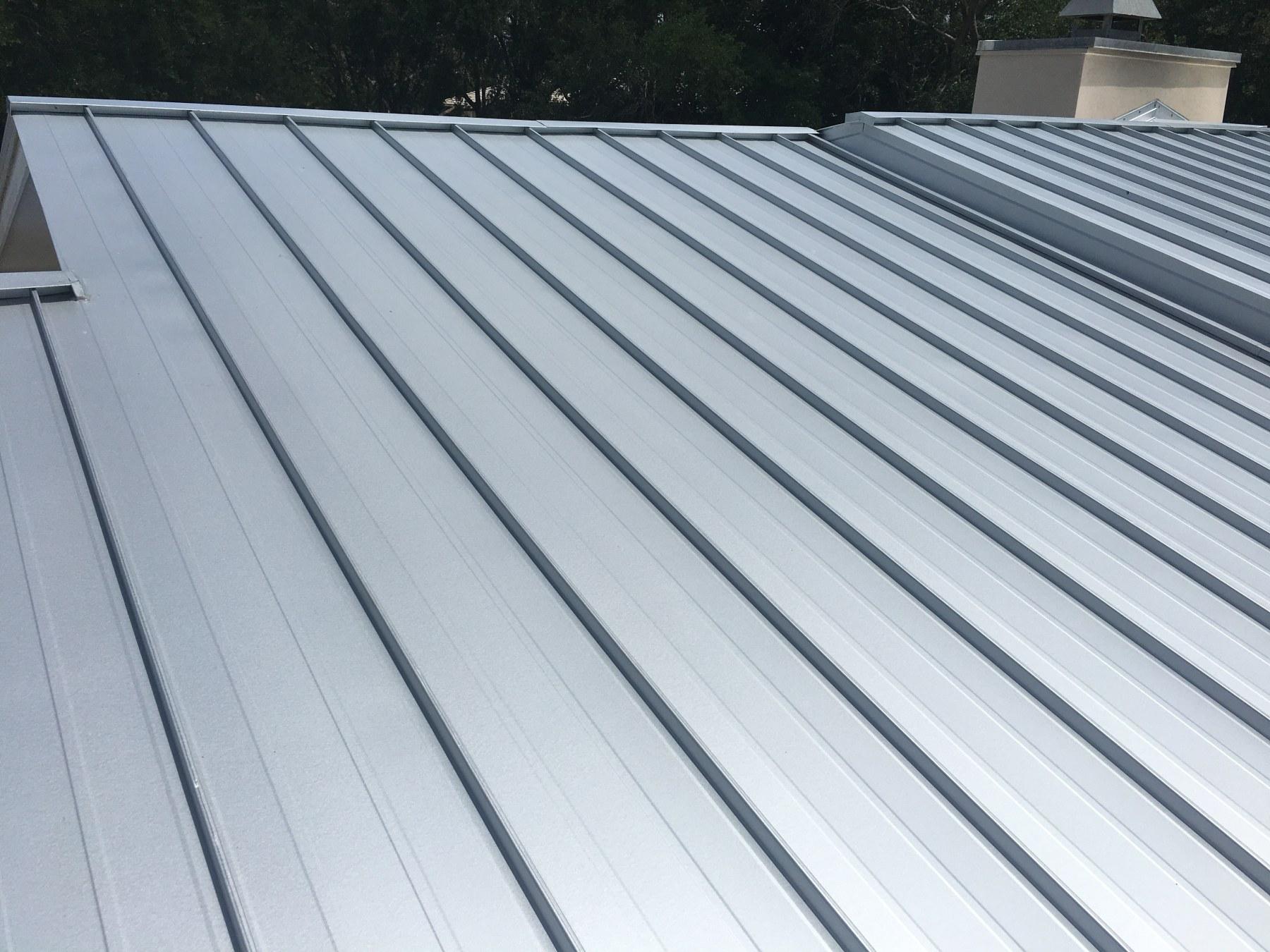
A metal roof in Florida can realistically last anywhere from 40 to 70 years, but the actual number depends on the type of metal, where you live, how well it was installed, and how consistently it’s maintained.
In most inland areas such as Orlando, Deltona, Kissimmee, and Sanford, a properly installed standing seam aluminum or Galvalume roof often reaches 50–70 years. Along coastal communities like Daytona, Port Orange, and New Smyrna Beach, constant salt exposure typically reduces that range to 40–60 years. Exposed-fastener systems generally have a shorter service life, while copper roofs can exceed 70 years even in aggressive coastal environments.
Here’s the part many roofing companies leave out: a metal roof is not automatically a 50-year roof. We’ve seen premium systems still performing decades later, and we’ve noticed poorly installed metal roofs develop serious problems in less than 20 years. The difference usually comes down to installation quality, material selection, wind-rated design, and maintenance.
If you’re trying to figure out how long your metal roof should last, a single lifespan number won’t tell you much. Your location, roofing system, and maintenance habits will.
Metal Roof Lifespan by Type in Florida
1. Standing Seam Aluminum: 40–70 Years
If you’re near the coast, this is usually the gold standard. Aluminum doesn’t rust, which makes it a strong choice for homes in Daytona, Port Orange, and New Smyrna Beach where salt spray is a constant concern.
- Best for: Coastal and waterfront homes
- Big advantage: Outstanding corrosion resistance
2. Standing Seam Galvalume: 50–70 Years
Galvalume combines steel with an aluminum-zinc coating, giving it excellent durability and value. In inland markets such as Orlando, Sanford, Deltona, and Kissimmee, it’s often the best balance of lifespan and cost. Near the coast, however, salt exposure can shorten its service life.
- Best for: Inland and near-coastal areas
- Big advantage: Long lifespan at a lower price than aluminum
3. Exposed-Fastener (Screw-Down) Metal Roof: 25–50 Years
These systems cost less upfront but typically don’t last as long as standing seam roofs. The metal panels often outlive the fasteners themselves. Rubber washers can dry out, crack, or loosen over time, especially under Florida’s intense sun.
- Best for: Budget-conscious projects
- Big advantage: Lowest upfront investment
4. Galvanized Steel: 20–45 Years
Galvanized steel uses a protective zinc coating to resist corrosion. It performs reasonably well inland but tends to age faster in coastal environments where salt accelerates corrosion.
- Best for: Inland locations only
- Big advantage: Affordable entry point into metal roofing
5. Copper: 70+ Years
Copper is one of the longest-lasting roofing materials available. Instead of rusting, it develops a protective patina that helps shield the metal from the elements. Properly installed copper roofs can outlast several generations of homeowners.
- Best for: Premium homes in any Florida climate
- Big advantage: Exceptional lifespan and distinctive appearance
6. Zinc: 60–100+ Years
Zinc roofs are still uncommon in Florida, but they offer remarkable longevity. Over time, zinc forms a self-healing patina that can repair minor surface scratches and slow corrosion.
- Best for: High-end architectural homes
- Big advantage: Extremely low maintenance and unmatched longevity
Not all metal roofs age the same way. A standing seam aluminum roof near the coast may outlast a galvanized steel roof by decades, while a well-installed Galvalume roof in Orlando or Sanford can easily deliver 50 years or more of service. The material matters, but installation quality, maintenance, and distance from saltwater often matter even more.
How Florida’s Climate Affects Metal Roof Lifespan
A metal roof that lasts 60 years in the Midwest may not reach the same age in Florida. The reason isn’t the metal itself. It’s the environment.
Intense UV Exposure and Daily Temperature Swings
Florida sunshine is great for beach days but hard on roofing materials. Year after year, UV radiation slowly breaks down paint finishes and protective coatings.
At the same time, metal panels expand during the heat of the day and contract again after sunset. That constant movement puts stress on fasteners, seams, flashings, and attachment points. Over decades, it can loosen exposed fasteners and wear out critical roof components.
If you’re investing in a metal roof, choose a PVDF finish such as Kynar 500® or Hylar 5000®. These premium coatings hold their color and resist UV damage far better than standard polyester paint systems.
Humidity and Year-Round Moisture
Florida roofs rarely get a break from moisture. Between humidity, afternoon thunderstorms, and hurricane season, roofing systems spend much of the year exposed to damp conditions.
If water gets beneath the panels through damaged flashing or aging fasteners, corrosion can begin where you can’t see it. That’s often when small problems turn into expensive repairs.
A high-quality synthetic underlayment provides an important second layer of protection if wind-driven rain gets past the metal panels.
Salt Air Accelerates Corrosion
This is one of the biggest differences between Orlando and coastal communities like Daytona, Port Orange, and New Smyrna Beach.
Salt carried by ocean winds can dramatically increase corrosion rates, especially on steel-based roofing systems. Even well-coated steel panels may show edge corrosion or fastener deterioration sooner when they’re exposed to salt air year after year.
For homes close to the ocean, aluminum is usually the safer long-term choice. If your home is within a few miles of the coast, aluminum typically outperforms steel because it doesn’t rust.
Hurricanes Test Every Part of the Roof
Most roofs don’t fail because they’re old. They fail because a major storm exposes a weak point. Hurricane-force winds place tremendous stress on roof panels, clips, fasteners, and flashing details. Even when the metal remains intact, wind-driven rain can find its way through small openings and create moisture problems underneath.
That’s why installation quality matters just as much as material selection. A properly engineered system with Florida Product Approval or Miami-Dade NOA certification is designed to withstand far greater wind loads than a basic installation.
Florida doesn’t just age metal roofs faster. It exposes every weakness in the system. The roofs that reach 50, 60, or even 70 years are usually the ones built for Florida’s climate from day one.
Why Some Metal Roofs Last 20 Years and Others Last 70
If you’ve researched metal roofing, you’ve probably seen two completely different lifespan estimates. Some manufacturers talk about 50 to 70 years. Meanwhile, some Florida home inspectors regularly encounter metal roofs with major problems in less than 20 years.
Surprisingly, both can be right.
The Manufacturer Perspective
Manufacturers base their lifespan estimates on properly installed roofing systems using the correct materials, coatings, and maintenance practices. Under those conditions, a quality standing seam metal roof can realistically last 40 to 70 years in Florida. The key phrase is under those conditions.
What Inspectors See in the Real World
Home inspectors don’t evaluate roofs in laboratory conditions. They inspect roofs that have been exposed to decades of Florida sun, humidity, salt air, storms, and varying installation quality.
That’s why some inspectors report finding significant deterioration, leaks, fastener problems, and coating failure on metal roofs that are only 17 to 20 years old.
The panels themselves are rarely the problem. The supporting components usually fail first.
The Real Reasons Metal Roofs Fail Early
Fastener Failure
On exposed-fastener systems, the rubber washers beneath each screw are often the first component to wear out. Florida’s UV exposure and daily temperature swings cause these washers to harden, crack, and shrink over time.
Once that happens, water can enter around the fastener and begin damaging the roof system. This is one of the most common causes of leaks on older screw-down roofs.
Installation Mistakes
We’ve seen expensive metal roofs underperform simply because they were installed incorrectly.
Overdriven screws, underdriven screws, poor flashing details, improperly sealed panel laps, and shortcuts around penetrations can dramatically shorten a roof’s lifespan. Even premium materials can’t compensate for poor workmanship.
Coating Breakdown
Not all paint systems perform equally in Florida. Lower-grade polyester finishes tend to fade, chalk, and deteriorate much faster under constant UV exposure. Once protective coatings begin breaking down, the underlying metal becomes more vulnerable to corrosion.
That’s one reason premium PVDF coatings such as Kynar 500® often justify their higher cost.
Lack of Maintenance
Many homeowners assume metal roofs are maintenance-free. They’re not. They are low-maintenance, but they still need periodic inspections, especially after major storms. Small issues such as loose fasteners, damaged sealant, or accumulated debris can often be corrected before they become expensive repairs.
How to Reach the Higher End of the Lifespan Range
The roofs that reach 50, 60, or even 70 years usually have three things in common:
- The right metal for the environment
- High-quality installation
- Consistent maintenance
A metal roof rarely fails because the panel simply wears out. More often, it fails because a fastener, flashing detail, sealant, or neglected repair allows water to get where it shouldn’t.
Schedule a professional roof inspection every year once your roof reaches 10 years old. If you live near the coast in areas like Daytona, Port Orange, or New Smyrna Beach, more frequent inspections can catch corrosion and fastener issues before they shorten the life of the entire system.
Frequently Asked Questions
1. Can a Metal Roof Really Last 50 Years in Florida?
Yes. A properly installed standing seam aluminum or Galvalume roof can realistically last 50 years or more in many parts of Florida. The key factors are installation quality, maintenance, and exposure to salt air.
2. What Part of a Metal Roof Usually Fails First?
It’s rarely the metal panels themselves. Most premature failures involve fasteners, flashing, sealants, or roof penetrations. That’s why regular inspections are so important.
3. Does Salt Air Shorten the Life of a Metal Roof?
Yes, especially for steel-based roofing systems. Homes near Daytona, Port Orange, and other coastal communities experience higher corrosion rates than inland areas such as Orlando or Sanford. Aluminum generally performs best in salt-air environments.
4. How Often Should a Metal Roof Be Inspected?
Most roofing professionals recommend an inspection at least once a year and after major storms. Coastal homes may benefit from more frequent inspections due to salt exposure.
5. Which Metal Roof Lasts the Longest in Florida?
Copper and zinc typically offer the longest lifespan, often exceeding 70 years. Among more common residential options, standing seam aluminum usually delivers the best combination of longevity and corrosion resistance.
6. Can Rust Be Prevented on a Metal Roof?
In many cases, yes. Choosing the right metal, maintaining protective coatings, and addressing scratches or damaged areas quickly can significantly reduce the risk of corrosion.
Get Expert Advice Before You Invest in a Metal Roof
A metal roof can be one of the longest-lasting upgrades you make to your home, but only if you choose the right system for your property and location. Coastal homes, inland neighborhoods, and hurricane-prone areas all have different roofing requirements.
Whether you’re comparing metal roofing options or trying to determine if your existing roof still has years of service left, we’re here to help. Our team provides honest recommendations, detailed roof evaluations, and practical guidance tailored to Florida homeowners.
Schedule your roof inspection today and get the answers you need to make a confident decision.