
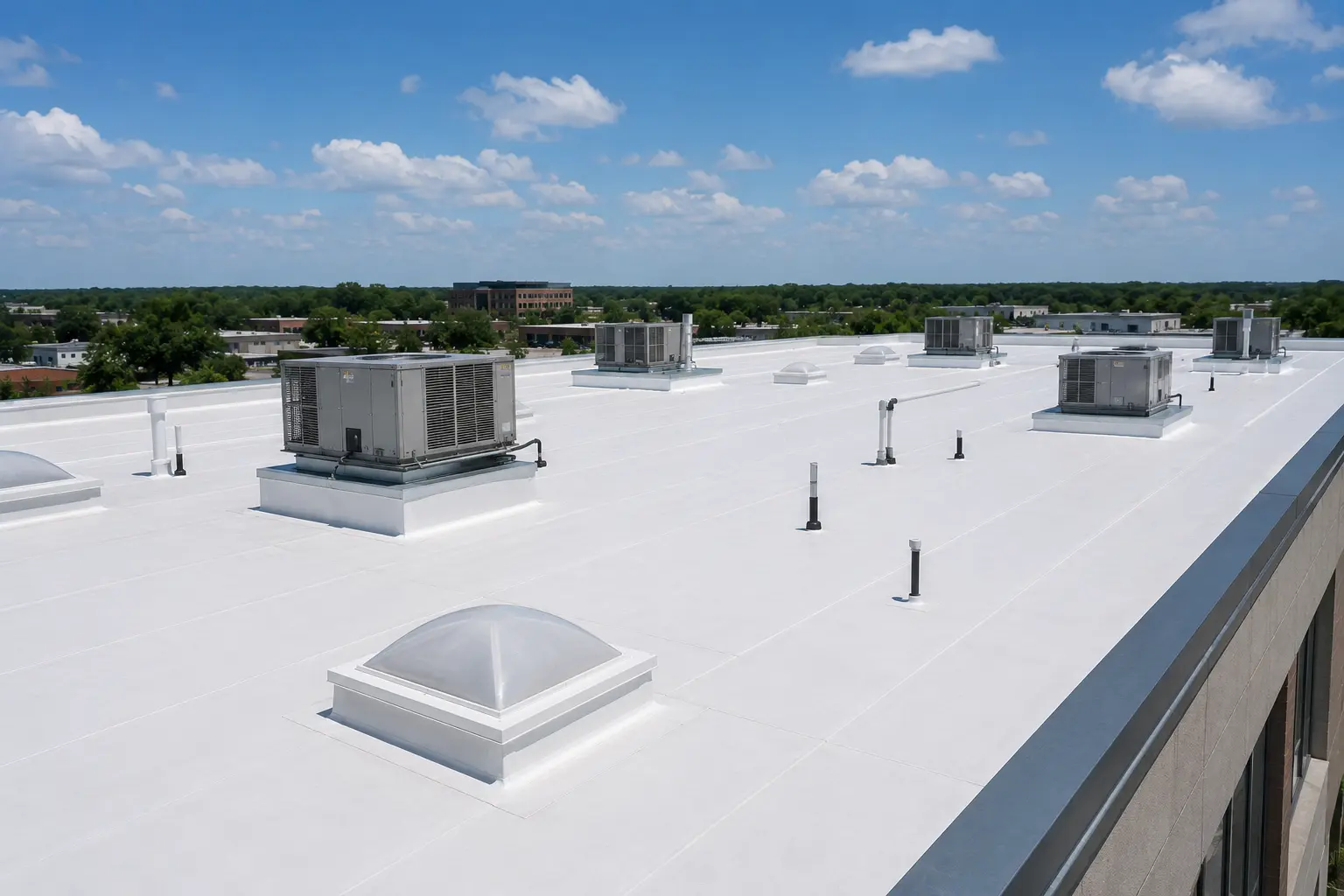
Signs It’s Time to Replace Your TPO Roof
A failing TPO roof rarely goes from ‘fine’ to “replace it tomorrow.” The warning signs usually show up months, sometimes years, before replacement becomes unavoidable. Knowing when a TPO roof needs replacement can save you from pouring money into repairs that no longer solve the underlying problem.
For commercial property owners and facility managers, the real cost isn’t just a roof leak. It’s disrupted operations, damaged inventory, unhappy tenants, and repair bills that keep coming back. If you’re patching the same areas after every heavy rain or noticing rising energy costs, your roof may be telling you it’s nearing the end of its service life.
Drawing from what we see on commercial TPO roofs every day, we’ll walk through the 10 warning signs that most often point to replacement rather than another repair. We’ll also explain when repairs are still worth making, when replacement becomes the more economical choice, and how to make that decision before small roof issues become major business disruptions.
Know Your TPO Roof Before You Assess It
TPO is a single-ply roofing membrane designed for flat and low-slope commercial buildings. When it’s installed correctly and maintained over time, most TPO roofs deliver about 20 to 30 years of reliable service. The problem is that installation defects, standing water, Florida’s intense UV exposure, and neglected maintenance can shorten that lifespan considerably.
That’s why early detection matters. Catching membrane shrinkage, seam separation, or moisture intrusion before they spread gives you time to plan a replacement on your schedule, avoid costly interior damage, and prevent repair costs from snowballing into an emergency project.
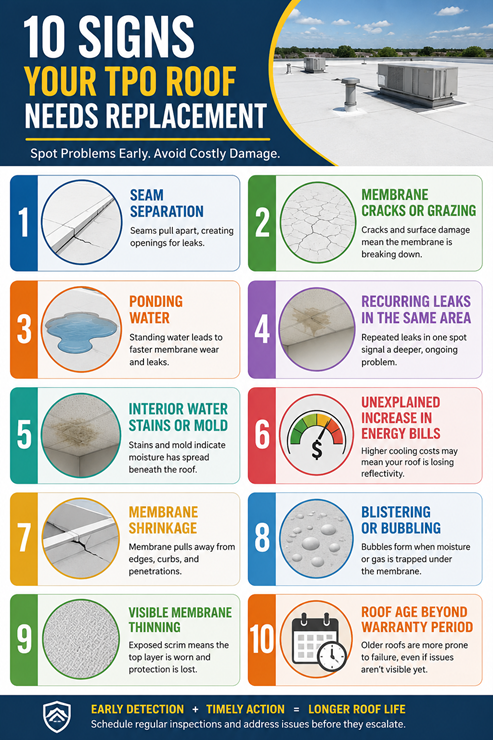
10 Critical Warning Signs Your TPO Roof May Need Replacement
1. Seam Separation
Seam separation is one of the first things we check during a commercial TPO roof inspection because it’s also one of the most common causes of leaks. As the roof expands and contracts with daily temperature changes, the heat-welded seams can begin to pull apart, especially if the original welds weren’t done properly.
Look closely around rooftop equipment, flashing, and roof edges for lifted seams, blisters, or small openings. Water stains inside the building below these areas are another strong warning sign.
Can It Be Repaired?
- Yes, if only a few seams have opened and the surrounding membrane is still in good shape. Re-welding the affected seams is often enough.
- No, if seam separation is widespread or the same areas keep failing. At that stage, TPO roof replacement is usually the smarter long-term investment.
We always recommend checking seams after Florida’s hottest months and again after cooler weather arrives. Temperature swings often reveal seam failures before they become active leaks.
2. Membrane Cracks or Grazing
A TPO membrane should stay flexible throughout most of its life. When you start seeing fine cracks, a web-like ‘alligator skin’ pattern, or a surface that feels stiff instead of flexible, the membrane is beginning to break down. This usually happens after years of UV exposure, which slowly strips away the membrane’s ability to expand and contract without tearing.
Can It Be Repaired?
Patching a few cracks may stop a leak for now, but it won’t fix the aging membrane underneath. If cracking is showing up across multiple sections of the roof, replacement is usually the more economical choice than continuing with temporary repairs.
When we see widespread cracking on a roof that isn’t particularly old, we also investigate whether poor installation or unusually harsh roof conditions accelerated the aging process.
3. Ponding Water
A little water after a storm isn’t unusual. Water that’s still sitting on your roof two days later is. Persistent ponding speeds up membrane wear and often signals drainage problems or structural low spots. Left alone, it can eventually soak the insulation beneath the membrane. You’ll often notice:
- Puddles that remain 48 hours or more after rain.
- Algae or vegetation growing in the same low areas.
- Soft, faded, or discolored membrane where water collects.
Can It Be Repaired?
- Yes, if the problem is caused by clogged drains or poor drainage. Cleaning drains or improving roof slope with tapered insulation may solve it.
- No, if standing water has already caused wet insulation, membrane blistering, or deck damage. In those cases, replacing the affected roof system is usually the better solution.
We never recommend ignoring ponding water. Even shallow puddles that return after every storm can take years off a TPO roof’s service life.
4. Recurring Leaks in the Same Area
One repair is maintenance. The third repair in the same spot usually means something bigger is going on. If the leak keeps returning, the real problem is often hidden beneath the membrane, not on the surface. The warning signs usually include:
- Water stains that come back after every major rain.
- Several patches clustered in the same section of the roof.
- Interior damage that keeps spreading despite repairs.
Can It Be Repaired?
Track both the repair history and the money you’ve spent. If the roof is over 15 years old and you’re repeatedly fixing the same area, replacement often costs less in the long run than continuing to patch it.
Always keep photos, repair invoices, and dates for every leak. Patterns become much easier to spot, and that history helps determine whether repairs are still worthwhile or if replacement is the smarter investment.
5. Interior Water Stains or Mold
By the time a ceiling stain appears, water has often been traveling beneath the roof for weeks or even months. That moisture doesn’t just damage ceiling tiles. It can soak insulation, reduce energy efficiency, encourage mold growth, and even affect the roof deck. In many cases, you’ll see:
- Brown or yellow stains on ceilings or walls.
- Mold or mildew near HVAC units, ceilings, or corners.
- Persistent musty smells on the upper floor.
Can It Be Repaired?
- Yes, if the leak is isolated and the surrounding roof system is still dry and structurally sound.
- No, if inspections show widespread wet insulation or multiple leak locations. At that stage, replacing the damaged roof system is usually the most economical option.
An infrared moisture scan is one of the quickest ways to see how far water has spread beneath the membrane without cutting into the roof. We’ve found it invaluable for deciding whether a repair is enough or replacement is unavoidable.
6. Unexplained Increase in Energy Bills
Sometimes the roof tells you there’s a problem before you ever see a leak. If your cooling costs keep climbing even though your HVAC system is working properly, your TPO membrane may have lost much of its reflective surface. Instead of bouncing heat away, the roof starts absorbing it, making the building harder and more expensive to cool.
You May Notice:
- Cooling bills increasing year after year without another obvious cause.
- A roof surface that looks dull, chalky, or gray instead of bright white.
- Certain rooms or areas feeling noticeably warmer than before.
Can It Be Repaired?
- Yes, if the membrane is still in good condition. A TPO-compatible reflective coating can restore much of its energy performance and extend the roof’s service life.
- No, if the roof is also cracking, thinning, or showing other signs of failure. In that case, replacement delivers better long-term value than a coating.
In our inspections, coatings deliver the best results on roofs with healthy membranes. Once multiple failure signs appear, replacement is usually the better investment.
7. Membrane Shrinkage
A TPO membrane should stay securely attached across the entire roof. When it begins shrinking with age, it pulls against the edges, flashing, and rooftop penetrations, creating openings where water can eventually get in. We usually see this on older roofs that have been exposed to years of heat and weather.
Typical Signs Include:
- Gaps forming along metal edge flashing or parapet walls.
- Membrane lifting or pulling tight around corners, pipes, and curbs.
- Seams near the roof perimeter looking stretched or under tension.
Can It Be Repaired?
Shrinkage doesn’t stop once it starts. Reinforcing the affected areas may buy some time, but the membrane will continue pulling away from its attachment points. In most cases, replacement is the only lasting solution.
On commercial roofs that are 15 years or older, membrane shrinkage is often one of the clearest signs that the roof is approaching the end of its service life.
8. Blistering and Bubbling
Not every blister means the roof has failed, but widespread bubbling is never something to ignore. These raised pockets usually form when moisture or trapped air gets beneath the membrane. The more blisters you see, the greater the chance that water has already reached the insulation.
You’ll typically notice raised bubbles scattered across the roof. As they grow, they may feel soft under light pressure, and if a professional inspection reveals water inside the blister, it’s a clear indication that moisture has worked its way below the membrane.
Can It Be Repaired?
- Yes, if there are only a few dry blisters and the surrounding membrane is still in good condition.
- No, if blistering is widespread or the blisters contain water. That’s often a sign the insulation below is wet, making replacement the better long-term solution.
We never recommend cutting open a blister yourself. A professional can safely determine whether it’s trapped air or moisture without creating another leak.
9. Visible Membrane Thinning
A healthy TPO roof has a smooth protective surface. When that top layer wears away, the reinforcing fabric, called the scrim, starts showing through. Once that happens, the membrane has lost much of its protection and becomes far easier to puncture. Look for signs like:
- A fabric-like texture becoming visible on the roof surface.
- Areas that feel rough instead of smooth.
- Sections that are more easily damaged by foot traffic or debris.
Can It Be Repaired?
Once the scrim is exposed, there’s no practical way to restore the membrane’s original strength. While small patches may slow water intrusion, widespread thinning usually means it’s time to plan for replacement.
During roof assessments, we often recommend a core sample on older TPO roofs to confirm how much membrane thickness remains before making a repair-or-replace decision.
10. Your Roof Has Simply Reached Its Expected Lifespan
Sometimes the biggest warning sign isn’t visible at all; it’s the roof’s age. Most TPO systems are designed to last around 20 to 30 years, with many manufacturer warranties ending after 15 to 25 years. Once a roof moves beyond that window, even small issues deserve closer attention. A few things to check:
- The roof is nearing or past 20 years old.
- The original warranty has already expired.
- Minor repairs are becoming more frequent each year.
If the roof is still performing well, regular inspections may safely extend its service life for a little longer. But if it’s beyond its warranty period and showing several of the warning signs in this guide, replacement is usually the more economical decision than continuing to invest in repairs.
One of the first things we verify during an inspection is the roof’s installation date and warranty history. That information provides valuable context when deciding whether another repair is worthwhile or it’s time to start budgeting for a replacement.
Roof Replacement vs. Roof Repair: How to Make the Right Call
Don’t base the decision on one leak alone. Look at the roof’s age, repair history, overall condition, and the total cost of keeping it going. If repair estimates are approaching 50% of the replacement cost, or you’re fixing the same areas every year, replacement usually offers better long-term value.
On the other hand, a newer TPO roof with isolated damage can often be repaired successfully, especially if it’s still under warranty.
Before making a final decision, compare multiple contractor assessments instead of focusing only on price. A thorough inspection, clear documentation, and a warranty review will tell you far more than a quick estimate. The goal isn’t choosing the cheapest option today; it’s avoiding the most expensive one later.
Frequently Asked Questions
1. Can a failing TPO roof still be repaired?
Yes, but only if the damage is limited to a few areas and the rest of the membrane is still in good condition. Localized seam repairs, punctures, or small blisters are often repairable. When problems become widespread, repairs typically become a temporary fix.
2. What is the most common sign of TPO roof failure?
Seam separation is one of the most common causes of TPO roof leaks. Once the welded seams begin pulling apart, water can travel beneath the membrane and damage the insulation long before leaks become visible inside the building.
3. At what age should a commercial TPO roof be replaced?
Most TPO roofs last between 20 and 30 years with proper installation and maintenance. If the roof is over 20 years old and showing multiple warning signs, it’s usually time to start planning for replacement rather than investing in repeated repairs.
4. Does ponding water mean my TPO roof needs replacement?
Not always. If standing water is caused by clogged drains or minor drainage issues, repairs may solve the problem. However, if ponding has already caused membrane damage, wet insulation, or structural deck issues, replacement is often the more practical solution.
Not Sure If Your TPO Roof Needs Replacement? Let’s Find Out.
If you’re seeing recurring leaks, seam separation, ponding water, or other warning signs, don’t wait until a small problem turns into an emergency replacement. Our team provides honest, thorough TPO roof inspections to determine whether a repair is still the right choice or if replacement will save you more in the long run.
We’ll assess your roof’s condition, explain our findings in plain language, and recommend the most cost-effective solution for your building. Whether your property is in Orlando, Deltona, Daytona, Kissimmee, Sanford, Port Orange, or the surrounding Central Florida area, we’re here to help you make a confident decision before the next storm puts your roof to the test.