
Commercial TPO Roofing Guide
Choosing a roofing system for a commercial building isn’t just about comparing prices. The membrane you install today will affect your maintenance budget, energy bills, tenant comfort, and even how well your building stands up to Florida’s heat, heavy rain, and hurricane season for the next 20 to 30 years. That’s why many property owners in Orlando, Kissimmee, Daytona, Sanford, and surrounding areas spend so much time weighing TPO against PVC and EPDM before making a decision.
The challenge is that not all TPO roofing systems perform the same. Membrane thickness, installation quality, drainage design, and contractor experience all play a bigger role than the material alone. A poorly installed roof can develop seam failures, leaks, or warranty issues long before it reaches its expected lifespan, turning what looked like a cost-effective investment into an expensive problem.
This guide breaks down everything you need to know about commercial TPO roofing, from how the system works and where it performs best to installation, costs, maintenance, and when a repair no longer makes sense. Whether you’re planning a new commercial TPO roof installation or budgeting for a commercial TPO roof replacement, you’ll have the information you need to make a confident, informed decision.
What Is Commercial TPO Roofing?
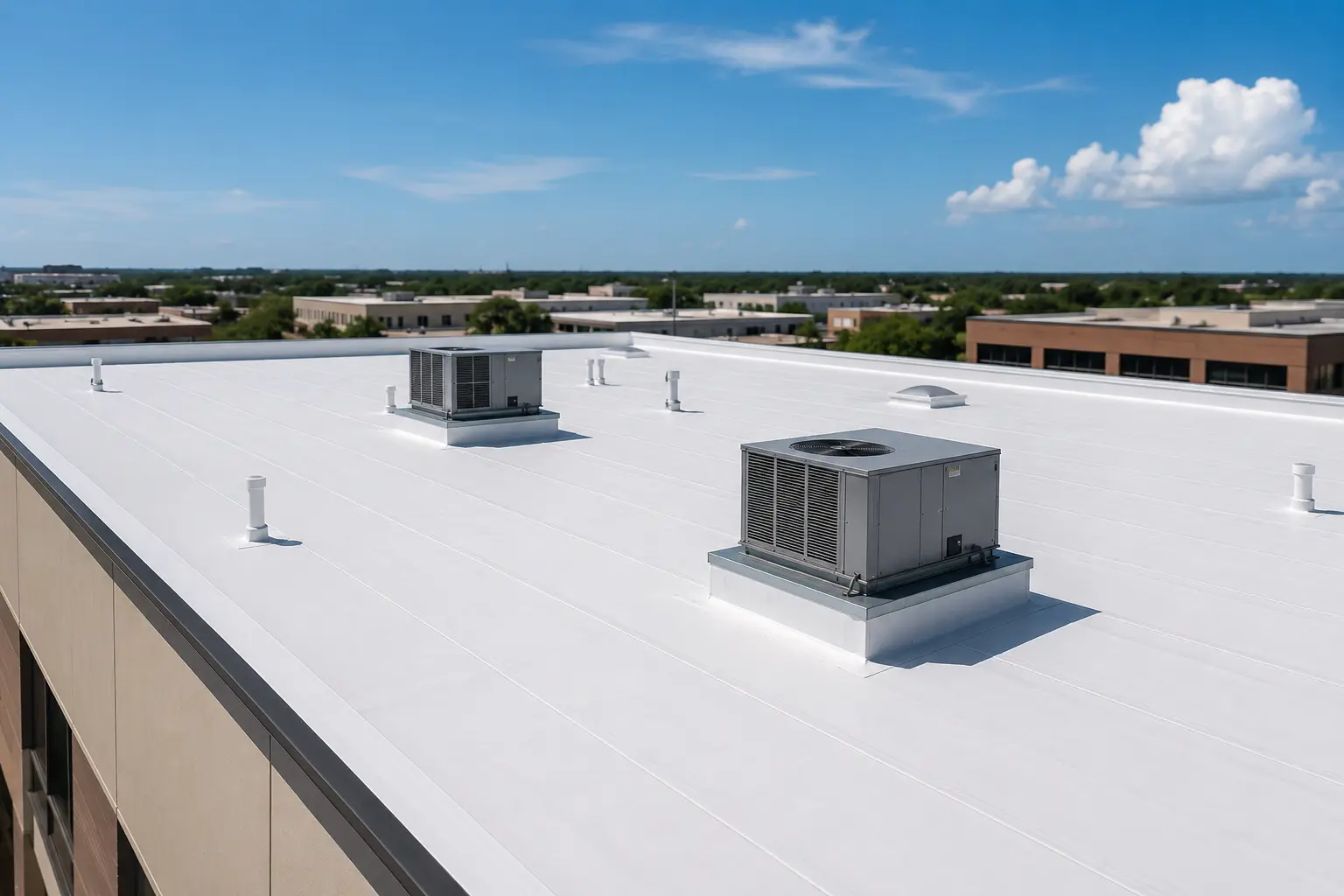
Commercial TPO roofing is a single-ply membrane system designed for flat and low-slope commercial buildings. Made from Thermoplastic Polyolefin (TPO), it features heat-welded seams and a reflective white surface that helps improve energy efficiency in Florida’s hot climate.
It’s a popular choice for warehouses, office buildings, retail centers, schools, and apartment complexes because it offers a strong balance of durability, performance, and value.
Why Commercial Buildings Choose TPO Roofing
For many commercial properties, TPO strikes a practical balance between upfront cost and long-term performance. Its reflective white surface helps reduce heat buildup, which can lower cooling demands during Florida’s long, hot summers, especially for large buildings with expansive roof areas.
Another advantage is flexibility. TPO works well on office buildings, warehouses, retail centers, medical facilities, schools, apartment complexes, and similar low-slope structures. If damage does occur, localized repairs are often straightforward, and quality systems can be backed by manufacturer warranties of 20 years or more when installed correctly.
For building owners in Orlando, Kissimmee, Daytona, Sanford, Port Orange, and nearby communities, TPO is often the preferred choice because it combines energy efficiency, durability, and cost-effectiveness without the higher price tag of some alternative membrane systems. Plus, many TPO membranes are recyclable, making them a smart option for projects with sustainability goals.
Where Commercial TPO Roofing Works Best
TPO is designed for flat and low-slope commercial roofs, making it a reliable choice for a wide range of property types, including:
- Retail centers and shopping plazas
- Office buildings
- Warehouses and distribution centers
- Medical facilities and healthcare campuses
- Schools and educational buildings
- Hotels and hospitality properties
- Apartment complexes and multifamily housing
- HOA-managed communities and clubhouses
- Churches and other places of worship
- Restaurants and commercial kitchens
- Manufacturing plants and industrial facilities
From office buildings in Orlando and warehouses in Sanford to hotels in Daytona and apartment communities in Kissimmee, TPO provides a durable, energy-efficient roofing solution that fits many commercial applications across Florida.
Anatomy of a Commercial TPO Roof System
A commercial TPO roof isn’t just a membrane stretched over a building. It’s a layered roofing assembly where every component has a specific job. If one layer fails, the performance of the entire system can suffer. Here’s what makes up a typical commercial TPO roof, starting from the structural deck and working upward.
Roof Deck
The roof deck is the structural base that supports the entire roofing system. Commercial buildings typically use steel, concrete, wood, or gypsum decks. Before any new roof is installed, the deck should be inspected for rust, rot, cracks, or moisture damage, since defects here can shorten the life of the roof above it.
Vapor Barrier
Not every building needs a vapor barrier, but it’s an important layer in facilities with high interior humidity or temperature differences, such as hospitals, food processing plants, and indoor pools. It helps prevent moisture vapor from migrating into the insulation, where it can reduce thermal performance and contribute to mold or trapped moisture.
Insulation
Rigid polyisocyanurate (polyiso) insulation is the most common choice beneath commercial TPO roofs because it provides excellent thermal resistance without adding excessive weight. In Florida, insulation also helps reduce cooling loads and can be tapered to direct water toward drains, minimizing the risk of standing water.
Cover Board
Installed between the insulation and the membrane, a high-density cover board creates a stronger, more stable surface for the TPO membrane. It improves impact resistance, reduces damage from rooftop foot traffic, and helps prevent the insulation from telegraphing through the membrane over time. For many commercial projects, it’s a worthwhile upgrade that can extend the roof’s service life.
Fasteners or Adhesives
Depending on the roof design, the system is secured with corrosion-resistant fasteners, adhesives, or a combination of both. The attachment method affects wind uplift performance, installation cost, and long-term durability, making it an important design decision rather than a one-size-fits-all choice.
TPO Membrane
This is the waterproofing layer that protects the building from rain, UV exposure, and weather. Individual membrane sheets are joined using hot-air welding, creating seams that are often stronger than adhesive-bonded joints. White TPO membranes also reflect a significant amount of solar heat, helping improve energy efficiency.
Flashings
Flashings seal vulnerable areas where the roof meets walls, parapets, HVAC curbs, skylights, vents, and drains. These transition points account for many commercial roof leaks, so properly welded and reinforced flashings are just as important as the membrane itself.
Walkway Pads
Areas around rooftop HVAC equipment and service routes experience repeated foot traffic. Walkway pads protect the membrane from punctures and abrasion, allowing maintenance crews to access equipment without damaging the roof.
Drainage System
Even the best TPO membrane won’t perform well if water can’t drain properly. Interior drains, scuppers, gutters, and tapered insulation work together to move water off the roof quickly. Good drainage reduces the risk of ponding water, seam stress, and premature membrane deterioration.
TPO Membrane Thickness
Membrane thickness plays a major role in how well a commercial TPO roof resists punctures, foot traffic, and long-term weather exposure. While thicker isn’t always necessary, 60-mil is the industry-recommended minimum for most commercial buildings, with 80-mil reserved for more demanding applications.
| Thickness | Best For | Typical Warranty* | Traffic Resistance | Expected Lifespan | Recommendation |
| 45 mil | Low-traffic, budget projects | 10–15 years | Low | 15–20 years | Not recommended |
| 60 mil | Most commercial buildings | 20 years | Medium–High | 20–30 years | Best overall choice |
| 80 mil | High-traffic & industrial roofs | 25–30 years | High | 25–35+ years | Best for maximum durability |
*Actual warranty terms vary by manufacturer, installation quality, and system specifications.
For most commercial projects in Florida, choose at least a 60-mil TPO membrane paired with a high-density cover board for better durability and longer service life.
Commercial TPO Installation Methods
The performance of a commercial TPO roof depends on more than the membrane itself. The way it’s attached to the building affects everything from installation cost to wind resistance and long-term durability. Below are the three most common installation methods.
1. Mechanically Attached
This method secures the membrane to the roof deck with plates and fasteners before the seams are heat-welded together. It’s the most common choice for warehouses, office buildings, and retail centers because installation is faster and more budget-friendly. The trade-off is that the membrane can move slightly during strong wind events.
2. Fully Adhered
Instead of fasteners, the membrane is bonded directly to the roof surface using a commercial-grade adhesive. This creates a smoother roof with minimal membrane movement, making it a great fit for hotels, hospitals, schools, and buildings in Florida’s higher wind zones.
While it costs more upfront, many owners choose it for its long-term performance.
3. Ballasted
In a ballasted system, the membrane is held in place by gravel or concrete pavers rather than fasteners or adhesives. Although installation costs can be lower, the added weight and lower wind performance make this option unsuitable for many commercial buildings in Florida.
Today, it’s typically limited to certain retrofit projects where the structure can support the additional load.
Commercial TPO Roof Installation Process
A commercial TPO roof is only as good as the installation behind it. Even a premium membrane can fail early if the roof isn’t prepared properly or the seams aren’t welded correctly. That’s why professional installers follow a proven process from start to finish, with quality checks at every stage.
Roof inspection
Every project starts with a detailed inspection of the existing roof. Contractors evaluate the roof deck, insulation, drainage, penetrations, and any signs of trapped moisture. This assessment determines whether the roof can be recovered or if a full commercial roof replacement is the better option.
Tear-off
If the existing roofing system has extensive damage or moisture intrusion, the old membrane and deteriorated insulation are removed. A complete tear-off provides a clean foundation and helps eliminate hidden issues that could affect the new roof.
Deck Rrepairs
Before any new materials are installed, the roof deck is repaired as needed. Rusted steel panels, rotted wood, cracked concrete, or loose fasteners are replaced to create a structurally sound base for the new roofing system.
Insulation and Cover Board
Rigid insulation is installed to improve the building’s energy efficiency and, when needed, tapered to promote positive drainage. A high-density cover board is then added to provide a smooth installation surface while improving impact resistance and overall roof durability.
Membrane Installation
Large TPO membrane sheets are rolled out, aligned, and secured using the specified installation method, whether mechanically attached or fully adhered. Proper layout helps minimize stress on the membrane and reduces the number of field seams.
Heat-welded Seams
Adjacent membrane sheets are fused together with hot-air welding instead of adhesives. Experienced installers also perform seam pull tests during installation to verify weld strength before moving to the next section.
Flashing Installation
Custom TPO flashings are installed around parapet walls, roof drains, HVAC curbs, vents, skylights, and expansion joints. These transition areas are among the most common sources of roof leaks, so careful detailing is critical.
Quality Control
Before the project is completed, the contractor performs a comprehensive inspection of seams, flashings, fasteners, drainage, and overall workmanship. Any deficiencies are corrected before the roof is presented for final approval.
Final Inspection
The completed roof is walked one final time to confirm it meets the project specifications, manufacturer requirements, and local building codes. The owner is also informed about maintenance recommendations and warranty responsibilities.
Warranty Registration
For projects backed by a manufacturer warranty, a final inspection may be carried out by the membrane manufacturer or its representative. Once the system passes inspection, the warranty is registered, giving the building owner documented coverage for the completed TPO roof.
Common Commercial TPO Problems
Even a well-built TPO roof will experience some wear over time. The good news is that most problems develop gradually, giving you plenty of opportunity to fix them before they become major expenses. Regular inspections, especially after storms are the best way to catch issues early and extend the life of your commercial roof.
Seam Failures
Heat-welded seams are one of TPO’s biggest strengths, but poor welding, roof movement, or years of weather exposure can cause them to separate. Early signs include small openings along the seams or isolated leaks after heavy rain.
In most cases, the affected seam can be cleaned and re-welded. Choosing a manufacturer-certified installer and testing seam welds during installation greatly reduces this risk.
Membrane Shrinkage
As the membrane ages, it can gradually contract if it wasn’t installed correctly or has been exposed to excessive stress. This often pulls against flashings and roof penetrations, creating gaps where water can enter. Localized repairs may solve minor issues, but severe shrinkage usually requires replacing affected membrane sections. Proper installation and the right attachment method are the best prevention.
Blistering
Blisters form when moisture or air becomes trapped beneath the membrane and expands with heat. While small blisters aren’t always an immediate concern, larger ones can weaken the roofing system over time. The damaged area is typically removed, dried, and patched. Installing TPO over a dry substrate is the most effective way to avoid this problem.
Punctures
Rooftops with HVAC equipment, solar panels, or frequent maintenance traffic are more vulnerable to punctures from tools, sharp objects, and foot traffic. Small holes can usually be repaired with a heat-welded TPO patch, but repeated damage is often a sign that protective walkway pads are needed.
Open Flashings
Roof penetrations and parapet walls are common leak locations because they’re constantly exposed to expansion, contraction, and movement. When flashings begin to lift or separate, water can quickly reach the insulation below. Routine inspections and prompt repairs help keep these vulnerable areas sealed.
Standing Water
Water that remains on the roof for more than 48 hours usually indicates poor drainage. Over time, ponding water places extra stress on seams, flashings, and insulation while increasing the likelihood of leaks. Cleaning drains, maintaining scuppers, and correcting drainage with tapered insulation can prevent long-term damage.
Chemical Exposure
Although TPO resists many environmental conditions, prolonged contact with grease, oils, solvents, or industrial chemicals can cause the membrane to deteriorate. This is most common around restaurant exhaust systems and manufacturing facilities. Protective barriers or in some cases, choosing PVC instead of TPO can help avoid premature damage.
UV Exposure
Florida’s intense sunlight eventually takes a toll on every roofing material. Over many years, the membrane may lose flexibility, fade, or develop surface wear. Regular inspections allow contractors to repair isolated damage before widespread aging makes replacement necessary.
Poor Installation
The majority of commercial TPO roofing problems can be traced back to installation mistakes rather than defective materials. Improper seam welding, inadequate flashing details, poor drainage design, or shortcuts during installation often lead to recurring leaks and shortened roof life.
Hiring an experienced, manufacturer-certified contractor is one of the best investments you can make in the long-term performance of your roof.
Ready to Invest in a Commercial TPO Roof?
Whether you’re planning a new commercial TPO roof installation, comparing roofing systems, or wondering if it’s time for a commercial TPO roof replacement, getting expert guidance early can save you thousands in unnecessary repairs and long-term operating costs.
Our team specializes in designing and installing code-compliant commercial TPO roofing systems built for Florida’s climate. We’ll inspect your roof, explain your options, provide transparent recommendations, and help you choose the right solution for your building, not just the most expensive one.
If your commercial property is in Orlando, Deltona, Daytona, Kissimmee, Sanford, Port Orange, or the surrounding Central Florida area, contact us today to schedule a professional roof assessment and receive a customized estimate for your project.