
Signs It’s Time to Replace Your Shingle Roof
If your Florida roof is 15 years old, losing granules, curling at the edges, or drawing attention from your insurance company, replacement may be closer than you think. The most reliable signs a roof needs replacing usually appear long before water starts dripping through the ceiling.
Florida is tough on shingles. Constant UV exposure, humidity, wind-driven rain, and hurricane-season storms can cut years off a roof’s expected lifespan. A shingle roof that might last decades in other states can reach the point where repairs stop making financial sense much sooner in Orlando, Daytona, Kissimmee, Deltona, Sanford, and throughout Central Florida.
That’s where many homeowners get stuck. The roof isn’t actively leaking, but it doesn’t look right either. Maybe you’ve noticed bare spots after a storm, dark streaks spreading across the shingles, or piles of granules in the gutters. Maybe your insurer has sent a notice requesting a roof inspection. These are often early roof replacement signs, not cosmetic issues.
The cost of waiting can be higher than the cost of acting. Once roof damage reaches the decking, causes interior moisture problems, or creates insurance complications, your options become more limited and more expensive.
The challenge is knowing when roof repair is no longer enough and when a full shingle roof replacement becomes the smarter investment. The warning signs are usually there. You just need to know what your roof is trying to tell you.
10 Warning Signs Your Florida Shingle Roof Needs Replacement
Not every roofing problem means you need a new roof. But some issues are your roof’s way of telling you that repairs are becoming temporary fixes. The warning signs usually appear months or even years before a leak, and recognizing them early can save you from expensive damage and insurance headaches.
1. Granules Are Filling Your Gutters
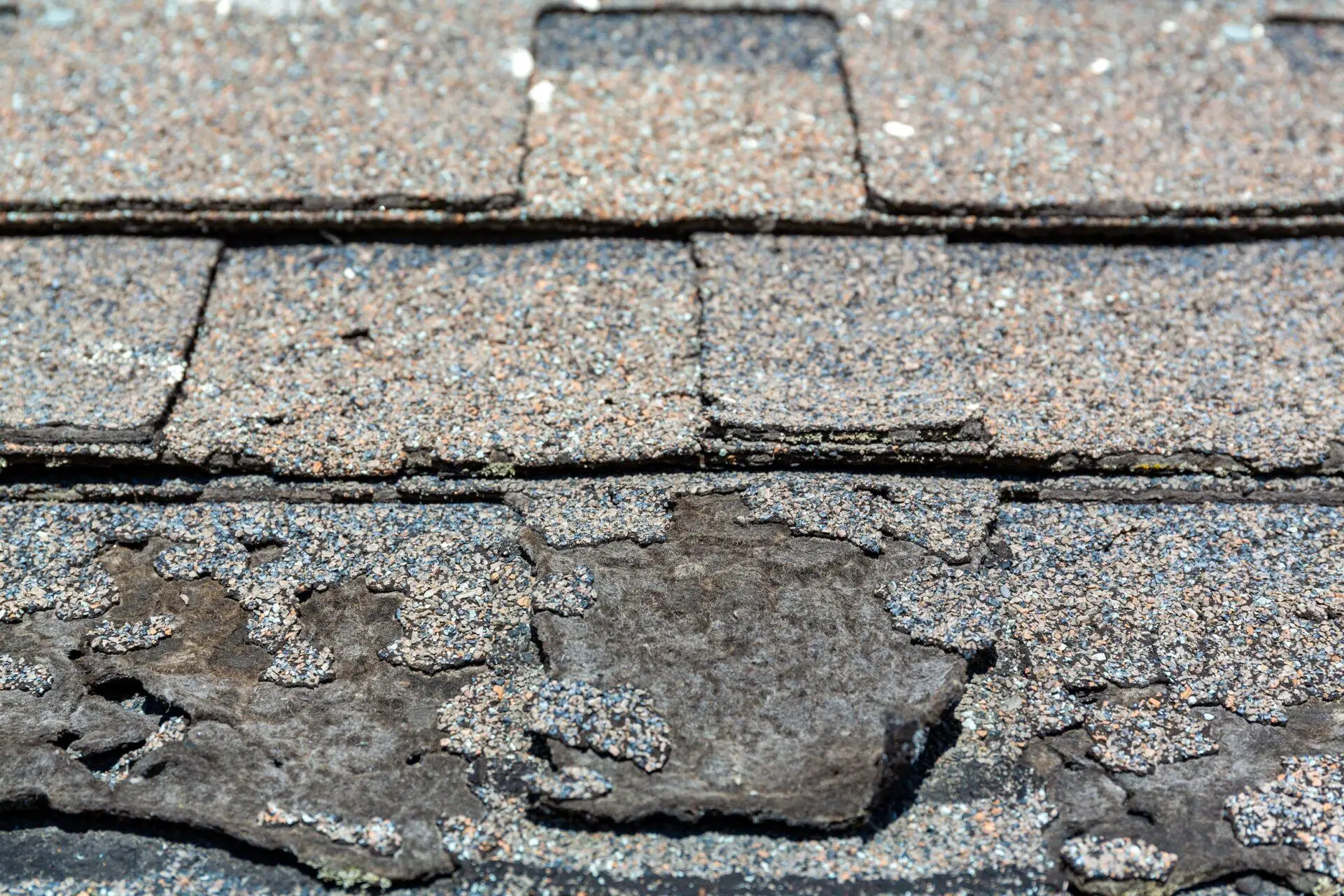
One of the earliest signs a roof needs replacing is excessive granule loss. The granules are the rough, sand-like coating on the surface of your shingles. Their job is to shield the asphalt underneath from Florida’s intense UV exposure. Once those granules start disappearing, the aging process speeds up dramatically.
After a heavy storm in Orlando, Sanford, Deltona, or Kissimmee, take a look inside your gutters. A small amount of granules is normal. Thick piles are not.
You should also look for dark or shiny patches on the roof itself. Those bald spots mean the protective layer is gone and the asphalt underneath is taking direct punishment from the Florida sun.
At that point, the roof damage usually accelerates. Shingles become brittle, crack more easily, and are far more vulnerable to leaks during wind-driven rain.
When replacement becomes likely: If granule loss is widespread across multiple roof sections or you can see the fiberglass mat beneath the shingles, you’re usually beyond a simple repair.
Take photos of your roof and gutters once a year, especially after hurricane season. Dated photos can help document deterioration if insurance questions arise later.
2. Shingles Are Curling, Cupping, or Buckling
Healthy shingles should lie flat. If the edges are turning upward, corners are lifting, or sections of the roof look wavy, your shingles are losing their ability to protect your home. This is one of the clearest roof replacement signs Florida contractors look for during inspections.
Florida’s climate creates a unique problem. Summer attic temperatures can exceed 140°F while humidity constantly works its way underneath aging shingles. The result is often a “cupping” effect where the center sinks while the edges curl upward.
It’s a pattern we frequently see on older roofs throughout Daytona, Port Orange, Apopka, and Altamonte Springs.
Once shingles start curling, the adhesive seal weakens. Wind can get underneath them more easily, increasing the risk of blow-offs during tropical storms and hurricanes.
This is also where many homeowners discover when roof repair is not enough. Replacing a few curled shingles may solve the immediate problem, but widespread curling usually indicates the roofing system is reaching the end of its service life.
When replacement becomes likely: If curling or buckling appears across large sections of the roof rather than a few isolated shingles, start planning for replacement before the next hurricane season arrives.
Ask yourself, if a major storm hit tomorrow, would you trust those curled shingles to stay attached? If the answer is no, your roof may already be telling you it needs more than another repair.
3. Cracked Shingles Across Multiple Areas of the Roof
A single cracked shingle after a storm isn’t usually a reason to replace your roof. Dozens of cracked shingles spread across different sections of the roof are a different story.
Florida roofs heat up all day under intense sunlight and then cool rapidly when afternoon thunderstorms arrive. Over time, that constant expansion and contraction makes shingles brittle, causing them to crack and split. Watch for:
- Vertical or diagonal cracks running through shingles
- Multiple cracked shingles on different roof slopes
- Damage concentrated on south- and west-facing roof sections
- Cracks appearing without a recent storm event
In older roofs throughout Orlando, Deltona, and Sanford, thermal cracking often develops long before homeowners notice interior leaks. Unlike impact damage, which is usually limited to a specific area, age-related cracking tends to appear across large portions of the roof.
Once cracks become widespread, water can work beneath the shingles and reach the underlayment, increasing the risk of hidden roof damage.
Pay attention when cracked shingles are appearing across multiple areas of the roof rather than one isolated section. That’s often a sign the roofing system is reaching the end of its service life, not simply suffering from a repairable defect.
4. Shingles Keep Disappearing After Every Storm
A roof shouldn’t lose shingles every time Florida weather shows up. If you find pieces of shingles in the yard after thunderstorms or notice bare sections on the roof after a tropical system, the problem is often bigger than the missing shingles themselves.
Healthy shingles stay sealed. Aging shingles don’t. As roofs age, the adhesive strips that hold shingles in place weaken from years of heat, UV exposure, and moisture. Once those seals fail, even moderate winds can lift shingles and peel them away.
This is a common issue on older roofs throughout Daytona, Port Orange, New Smyrna Beach, and other areas that regularly experience coastal winds and tropical weather.
Many homeowners replace a few missing shingles only to see the same section fail again during the next storm. That’s usually a sign the roof has lost its overall wind resistance.
Insurance companies pay attention to this as well. A roof that repeatedly loses shingles may raise concerns during inspections because it no longer performs as intended in high-wind conditions.
Don’t wait for hurricane season if shingles continue blowing off after repairs. Repeated failures often mean the roofing system has reached the point where replacement makes more sense than patchwork fixes.
5. You Can See Daylight from Inside the Attic
One of the easiest ways to spot hidden roof damage is from inside the attic. On a sunny day, turn off the lights and look up. If you can see daylight coming through the roof deck, your roofing system has vulnerabilities that need attention. You should look for:
- Pinpoints of sunlight coming through the decking
- Gaps around vents, flashing, or roof penetrations
- Water stains on wood framing or insulation
- Signs of mold, mildew, or damp insulation
Even small openings deserve attention. Florida’s humidity can cause roof decking to swell, warp, or deteriorate over time. Previous repairs can also leave gaps that widen as the roof ages.
Light and water usually travel through the same pathways. That’s why attic inspections often uncover roof damage long before stains appear on ceilings or walls.
Homes in humid areas such as Kissimmee, Oviedo, Apopka, and Altamonte Springs are especially vulnerable because trapped moisture tends to linger inside the roofing system.
Treat visible daylight as urgent. If sunlight can get in, wind-driven rain can too. A professional roof inspection should include both the roof surface and the attic to identify hidden deterioration before it turns into a costly repair.
6. Your Roofline No Longer Looks Straight
Step back to the curb and look across the roofline. If part of the roof appears to dip, bow, or sag, you’re no longer dealing with a shingle problem alone. You’re looking at a structural warning sign.
A sagging roof deck usually develops after years of moisture intrusion. Water works its way beneath aging shingles, softening the plywood decking underneath. In Florida, high humidity can accelerate this process, and in some homes, hidden termite activity makes the problem even worse.
This is something we occasionally see on older roofs in Deland, Oviedo, and Eustis where long-term moisture damage went unnoticed until the roofline visibly changed shape.
Unlike cracked or missing shingles, a sagging deck cannot be solved with a patch. The affected decking must be replaced, and current Florida building codes require roof systems to meet modern wind uplift standards during replacement projects. If the roof structure is already showing signs of weakness, delaying repairs only increases the risk of major storm damage.
A sagging roof is one of the clearest signs a roof needs replacing. Structural deterioration rarely gets better with time.
7. You’ve Fixed Leaks Before, but They Keep Coming Back
One leak can be a flashing problem. Several leaks over a period of years usually point to something bigger. Water stains on ceilings, discoloration around walls, peeling paint, musty attic odors, or recurring drips during heavy rain all suggest that moisture is finding multiple pathways into the home.
In Florida, leaks often begin around roof penetrations such as plumbing vents, skylights, and exhaust vents. Years of UV exposure dry out sealants and weaken flashing components. Eventually, water gets in.
The concern grows when leaks start appearing in different parts of the house. At that point, the issue is often no longer limited to flashing. The roofing system itself may be reaching the end of its service life.
Many homeowners spend thousands chasing one leak after another when a roof replacement would have solved the underlying problem years earlier.
When roof repair is not enough, recurring leaks are usually the warning sign. If stains keep returning despite previous repairs, replacement often becomes the more cost-effective option.
8. Those Black Streaks May Be Aging Your Roof Faster
Many homeowners assume algae stains are only a cosmetic issue. In Florida, that’s not always true. The dark streaks commonly seen on roofs throughout Orlando, Apopka, Winter Park, and Longwood are typically algae growth fueled by heat, humidity, and moisture retention. Moss and mold can also develop on shaded roof sections that stay damp for long periods.
The problem isn’t the discoloration itself. The problem is what comes with it. Algae and moss hold moisture against the shingle surface, preventing it from drying properly. Over time, that trapped moisture can accelerate granule loss, weaken the asphalt, and shorten the roof’s remaining lifespan.
In drier parts of the country, algae is often an appearance issue. In Florida, it’s part of the aging process.
Take a closer look if algae covers large sections of the roof or if moss is lifting shingle edges. Combined with other roof replacement signs, it may indicate that the roof is nearing the end of its useful life.
9. The Weakest Parts of the Roof Are Starting to Fail
Most leaks don’t start in the middle of a shingle field. They start where different roofing components meet.
Check around chimneys, plumbing vents, skylights, roof valleys, and wall intersections. These areas rely on flashing and sealants to keep water out.
Over time, Florida weather attacks both. Salt air can corrode flashing in coastal communities such as Daytona Beach, Port Orange, Edgewater, and New Smyrna Beach. Constant UV exposure dries out sealants and cracks rubber vent boots long before homeowners notice a problem.
The result is often slow water intrusion that remains hidden until stains appear inside the home. If your flashing is failing but the roof is otherwise relatively new, repairs may be enough.
If flashing problems are widespread and the shingles are also showing significant age-related wear, replacement is often the smarter investment because it allows the entire system to be rebuilt with updated flashing details and modern code-compliant underlayment.
10. Your Roof’s Age Alone May Be a Problem
Here’s something many Florida homeowners don’t realize. The first sign your roof needs replacement may come from your insurance company, not your roof. A roof can look acceptable from the ground and still trigger concerns during underwriting reviews. In today’s Florida insurance market, age matters.
Many carriers closely evaluate asphalt shingle roofs once they reach the 15 to 20-year range. Some require inspections to verify remaining service life. Others may request repairs, documentation, or replacement before renewal.
That’s why homeowners in Sanford, Kissimmee, Deltona, and across Central Florida are often surprised when they receive a notice about an older roof that hasn’t leaked yet.
Insurance companies don’t evaluate roofs the same way homeowners do. They’re looking at risk. If your roof is approaching 15 years old, now is the time to schedule a professional inspection, review its condition, and begin planning ahead.
Not every replacement decision starts with obvious roof damage. In many cases, roof age, declining performance, and insurance requirements become the deciding factors long before a major leak appears.
Repair vs. Replacement: Making the Right Call in Florida
Not every roofing problem justifies a full replacement. If your roof is relatively new, the damage is limited to a small area, and the rest of the shingles are in good condition, a targeted repair is usually the right move. A few missing shingles after a storm or a localized flashing issue can often be fixed without replacing the entire roof.
The equation changes when the roof is older and problems start appearing in multiple places. A 15-year-old Florida roof with granule loss, curling shingles, and recurring repairs may technically be repairable. The better question is whether it’s worth continuing to invest in a roof that’s already approaching the end of its useful life.
This is where many homeowners spend money twice. For example, spending $2,000 to $3,000 on repairs over the next few years may seem cheaper today. But if a roof replacement is likely within that same timeframe, those repair dollars rarely provide a strong return.
A new roof may also improve insurability, reduce the risk of storm-related damage, and increase buyer confidence if you’re planning to sell.
Don’t use active leaks as your replacement benchmark. By the time water reaches your ceiling, the decking and underlying structure may already be affected.
Pre-Hurricane Season Replacement Timeline
A roof replacement planned on your schedule is always better than one forced by a storm. Florida’s hurricane season runs from June through November, with the highest storm activity typically arriving between August and October. If your roof is already showing signs of failure, waiting until hurricane season starts adds unnecessary risk.
The best time to inspect, plan, and replace a roof is before June arrives. You’ll have more contractor availability, fewer permitting delays, and more time to address issues before severe weather becomes a threat.
Florida Roof Readiness Calendar
- January – February: Schedule inspections, gather estimates, and compare contractors. This is often the easiest time to secure availability.
- March – April: Finalize permits and complete your roof replacement before demand increases.
- May: Last call before hurricane season. Contractor schedules fill quickly, and delays become more common.
- June – November: Hurricane season. Replacements can still happen, but weather interruptions and emergency demand may affect timelines.
- After Installation: Schedule a wind mitigation inspection, send documentation to your insurer, and keep all permits and warranty records in a safe place.
If your roof is 15 years old or showing multiple warning signs, aim for an inspection no later than spring. That gives you enough time to make a replacement decision before storm season arrives.
Don’t Wait Until Replacement Becomes an Emergency
Most roofs give plenty of warning before they fail. The problem is that many Florida homeowners don’t act until a leak, storm, or insurance notice forces the issue. If your roof is showing multiple signs of wear, or it’s approaching 15 years old, now is the time to get answers.
Schedule a professional roof inspection, understand your options, and make a plan before the next hurricane season arrives. A proactive roof replacement is almost always less stressful and less expensive than an emergency one.