
Signs It’s Time to Replace Your Metal Roof
A metal roof can last 40 to 70 years, but not every roof makes it that far. If you’re seeing recurring leaks, rust that goes beyond the surface, loose panels, or widespread fastener problems, it may be time to think about a metal roof replacement instead of another repair.
Most failing metal roofs don’t quit overnight. They give you warning signs first. The problem is that waiting too long can turn a manageable repair into damaged decking, mold, soaked insulation, and a much bigger bill.
Florida’s climate doesn’t give metal roofs an easy ride. From the summer storms that roll through Orlando and Sanford to the coastal moisture around Daytona and Port Orange, the signs of a failing roof tend to show up the same way. Here’s how to spot the warning signs early and decide when a repair is enough or when replacement makes better financial sense.
10 Warning Signs Your Metal Roof Needs Replacement
1. Widespread Corrosion and Rust
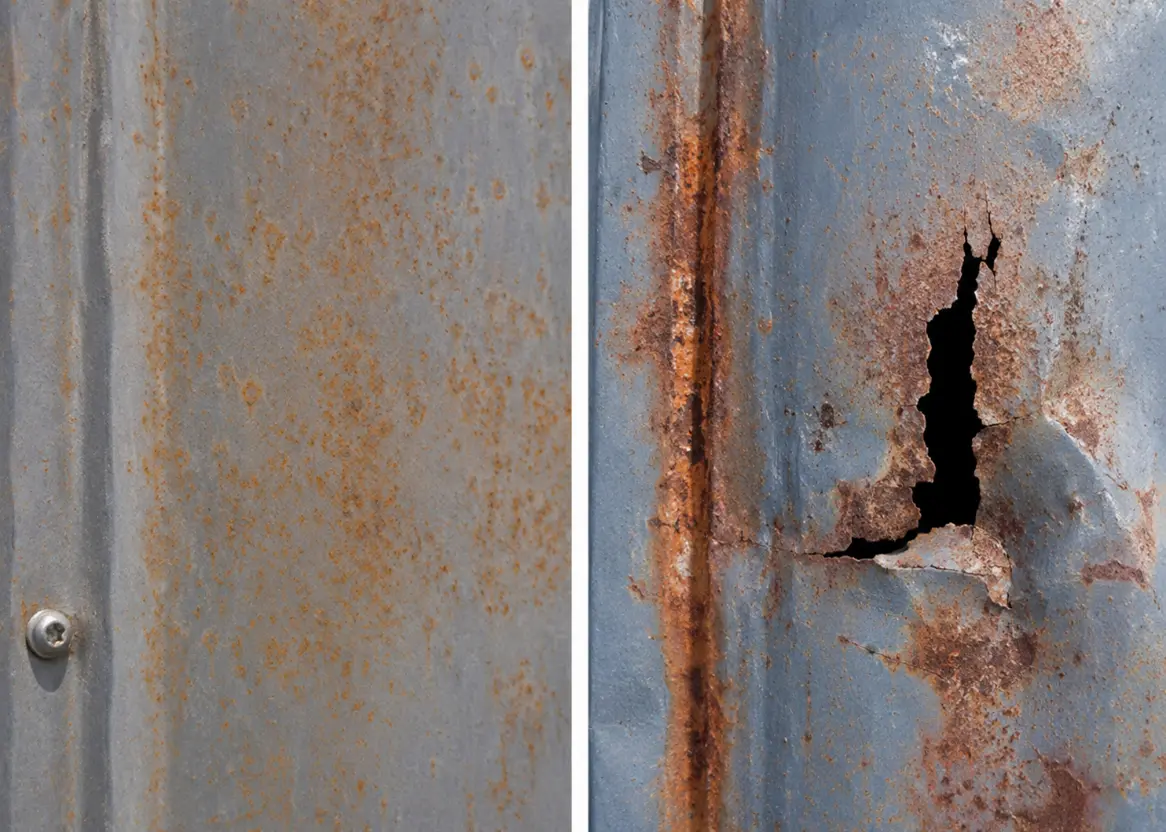
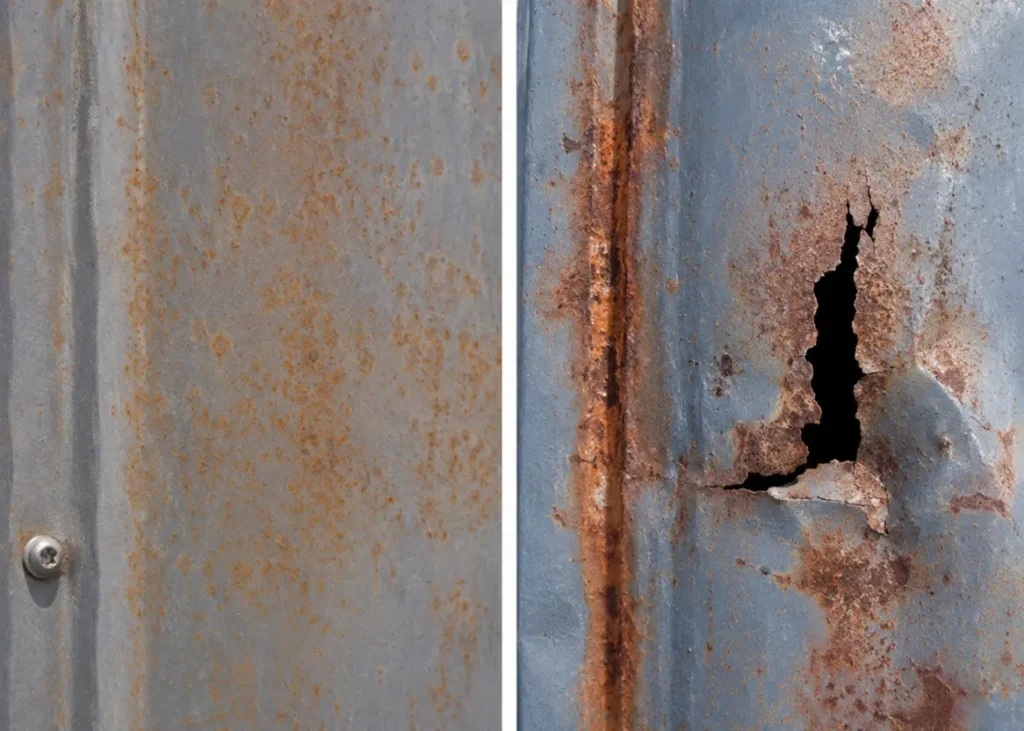
A little rust doesn’t automatically mean you need a new roof. The real concern is rust that has eaten through the protective coating and into the metal itself. Once you see pitting, flaking, or small holes, the panel has lost strength and replacement is usually the better option.
Start by checking how deep the rust goes. Surface rust can often be cleaned and treated. If the metal feels soft, flakes apart, or a screwdriver easily pushes through it, the damage has gone beyond a simple repair. Keep an eye out for these material-specific warning signs:
- Steel roofs: Red-orange rust around fasteners, cut edges, and panel overlaps. Once rust eats through the galvanized coating, water can reach the underlayment.
- Aluminum roofs: White, powdery corrosion and small pits instead of red rust. This is more common in coastal areas like Daytona, Port Orange, and New Smyrna Beach or where incompatible metals touch, causing galvanic corrosion.
- Copper and zinc roofs: These develop a natural patina rather than rust, but corrosion can still form around solder joints or areas exposed to constant acidic runoff.
Rust rarely stops at one panel. If several adjoining panels show rust-through, replacing that section or even the entire roof, often costs less in the long run than making repeated repairs.
2. Persistent Leaks and Water Stains
One leak after a storm isn’t always a sign your roof has failed. Leaks that keep coming back, or start appearing in different parts of the house, usually point to a much bigger problem.
The issue could be failing underlayment, separated seams, worn-out sealants, or metal roof damage that’s letting water slip beneath the panels. After a heavy rain, head into the attic and check for:
- Water stains on the roof decking
- Damp or compressed insulation
- Mold or mildew
- Musty odors
- Daylight coming through the roof deck
If stains are showing up on ceilings or walls in multiple rooms, your roof may no longer be shedding water properly.
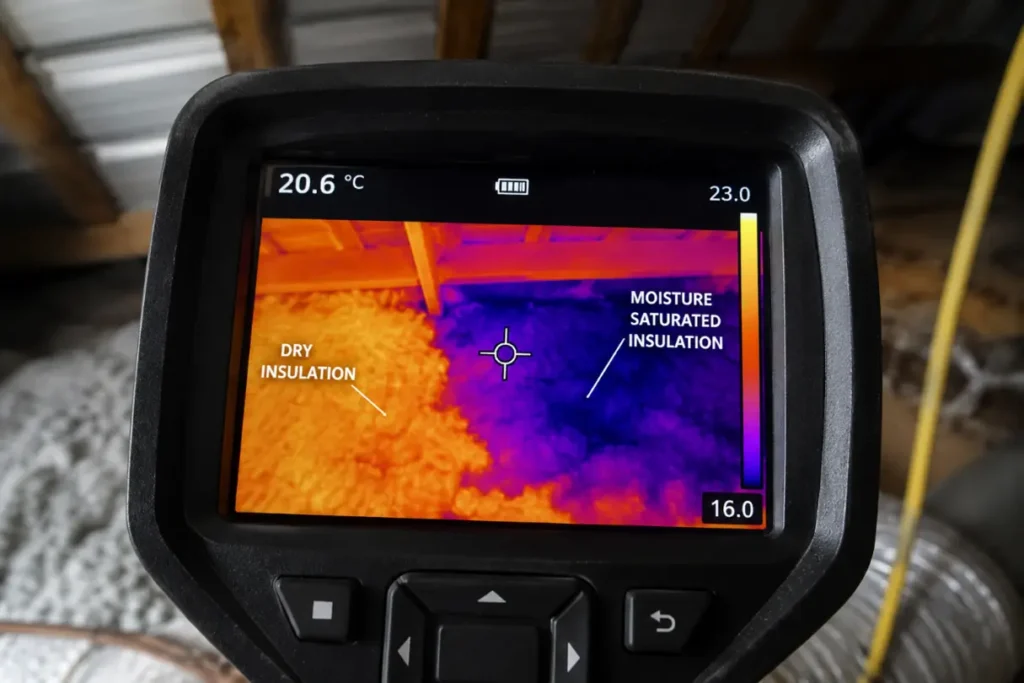
A moisture meter can help detect hidden moisture before stains appear. You can also use thermal imaging during a professional inspection. An infrared camera can reveal moisture trapped inside insulation or roof decking that’s invisible to the naked eye.
3. Fastener Problems: Backed-Out, Missing, or Rusted
A metal roof depends on thousands of fasteners to stay secure. When enough of them fail, panels can shift, leak, or even lift during Florida’s high winds. Take a close look for these common problems:
- Backed-out fasteners: Screw heads sitting above the panel instead of lying flush. This usually happens after years of thermal expansion and contraction.
- Missing fasteners: Every missing screw leaves a direct path for water.
- Rusted fasteners: Corroded screws eventually lose their grip and can stain the surrounding panel.
Also check the rubber washers beneath exposed fasteners. UV exposure eventually causes them to crack or harden, reducing their ability to seal out water.
If a handful of screws are loose, replacing them may solve the problem. But if roughly 10–15% of the fasteners have backed out or rusted and the roof is already showing its age, a full metal roof replacement is often the more cost-effective choice.
You can use a drone or telescopic inspection camera to check fasteners on steep roofs without walking on the panels. It’s a safer way to spot loose, missing, or rusted screws before they become major leaks.
4. Panel Damage: Dents, Cracks, and Oil-Canning
Not every dent is a problem. Metal roofs are built to withstand hail, wind-blown debris, and the occasional branch. What deserves your attention is damage that breaks the panel or its protective finish. The damage becomes more serious when you notice:
- Cracks or splits: These usually develop around bends, seams, or impact points. As the roof expands and contracts with temperature changes, the cracks grow and allow water inside.
- Oil-canning: This is the visible waviness you sometimes see across flat metal panels. Mild oil-canning is generally cosmetic and often relates to installation. If it’s severe, however, it can put extra stress on fasteners and eventually lead to cracking.
- Creased or bent panels: A hard impact can fracture the factory coating even if the panel doesn’t leak immediately. Once bare metal is exposed, corrosion isn’t far behind.
After a hailstorm, don’t just look for dents. Check for cracked paint or small dimples where the coating has chipped away. Those exposed spots can quickly become rust points if left untreated.
5. Fading, Chalking, and Coating Failure
The color on your metal roof does more than improve curb appeal. It acts as a protective barrier against UV rays, moisture, and corrosion. Once that coating begins to fail, the metal underneath becomes much more vulnerable. A roof nearing the end of its protective life often shows these signs:
- Uneven fading: Some fading is expected over time, but patchy or excessive fading can indicate the coating is breaking down.
- Chalking: Rub your hand across the panel. If a white, powdery residue comes off, the paint resin is deteriorating.
- Peeling, blistering, or flaking paint: These are clear signs the coating has lost its bond with the metal.
A worn-out coating can also reduce your roof’s solar reflectance. According to industry testing from the Cool Roof Rating Council (CRRC), reflective roof coatings gradually lose performance as they age, which can contribute to higher cooling costs in Florida’s hot climate.
You should use a coating thickness gauge if you want a more accurate assessment. When protective coatings have worn thin across large sections of the roof, replacement is often a better long-term investment than repainting isolated areas.
6. Structural Sagging or Uneven Rooflines
Stand back from your house and look at the roofline. It should appear straight from end to end. If you notice a dip, wave, or sag, don’t ignore it.
Unlike surface damage, this usually points to problems beneath the metal panels. Long-term water intrusion can rot the roof decking, weaken rafters, or damage structural supports, allowing sections of the roof to settle over time. If it’s safe to enter the attic, check for:
- Cracked or bowed rafters
- Soft or rotting roof decking
- Separated trusses or framing members
- Signs of long-term moisture damage
This isn’t the type of problem a new panel or a tube of sealant will fix. The underlying structure has to be repaired before a new roofing system can be installed.
If you spot a sagging section, stay off that part of the roof. Walking on weakened decking can be dangerous. Have a qualified roofing contractor inspect it as soon as possible to determine whether the damage is limited to the decking or extends into the structural framing.
7. Rising Energy Bills Without Explanation
If your summer cooling bills keep climbing but your HVAC system is working properly, your roof could be part of the problem.
A metal roof reflects a significant amount of the sun’s heat. As its protective coating wears down or leaks begin affecting the insulation below, that energy efficiency starts to disappear. Below are a few things that could be driving those higher bills:
- A weathered coating absorbs more heat instead of reflecting it.
- Roof leaks can damage insulation or ventilation, allowing conditioned air to escape.
- Heat transfers more easily into the attic, forcing your air conditioner to work harder.
On a hot afternoon, compare the temperature of your ceiling with an interior wall using an infrared thermometer. A noticeable difference may suggest the roof is absorbing more heat than it should.
You can also touch the underside of the roof deck from inside the attic. If it feels excessively hot despite proper attic ventilation, the roof’s reflective barrier may no longer be performing as intended.
8. Seam Separation and Flashing Failure
Most metal roof leaks don’t start in the middle of a panel. They usually begin where two materials come together.
Seams, flashings, and roof penetrations around chimneys, skylights, plumbing vents, and exhaust pipes experience constant expansion and contraction. Over time, sealants dry out, flashings loosen, and small gaps begin to form. Check these areas carefully for:
- Open or separated panel seams, especially on standing seam systems.
- Loose or lifted flashing around roof penetrations.
- Cracked, missing, or dried-out sealant.
- Rust forming around seams or flashing edges.
A simple water test can help pinpoint the problem. Have someone spray a garden hose over one roof section at a time while another person watches from inside the attic for signs of water intrusion.
If you can slide a thin piece of paper into an open seam, water can get in too. Re-sealing may solve the issue temporarily, but if the seams have opened because the panels have shifted, the roof system is likely nearing the point where replacement makes more sense than repeated repairs.
9. Age and Material-Specific End-of-Life Signs
Even the best-installed metal roof won’t last forever. If your roof is approaching the end of its expected lifespan, small problems can start appearing more frequently, even when everything looks fine from the ground. General life expectancy varies by material as below:
- Steel: Around 40–60 years, depending on coating quality and maintenance.
- Aluminum: Typically 40–50 years, although coastal salt exposure can shorten its lifespan.
- Copper: Often 70–100 years or more, with failures usually occurring at soldered joints rather than the panels themselves.
- Zinc: Commonly 80–100+ years when properly installed and ventilated.
According to the National Roofing Contractors Association (NRCA), these are average service lives rather than guarantees. Installation quality, maintenance, Florida’s climate, and storm exposure all play a major role in how long a roof actually lasts.
If your roof is already near its expected lifespan and you’re dealing with recurring leaks, rust, or fastener problems, continuing to repair it often becomes less cost-effective than replacing it.
10. Hidden Damage: Underlayment and Decking Deterioration
Sometimes the biggest problem isn’t the metal roof you can see; it’s what’s underneath it. Beneath every metal roofing system is an underlayment that serves as a secondary water barrier.
As it ages, that material can dry out, tear, or deteriorate from years of trapped moisture. By the time symptoms appear inside the house, the damage underneath may already be extensive. Possible warning signs include:
- Water stains inside the attic
- Musty odors that don’t go away
- Soft or spongy areas in the roof deck
- Persistent leaks even after repairs
Unfortunately, there’s no reliable way to inspect the underlayment from the outside. In most cases, a roofing contractor has to remove several panels to evaluate its condition.
If your metal roof is more than 30 years old and the underlayment has never been inspected, it’s worth scheduling a professional evaluation. Since replacing underlayment requires removing the roofing panels, widespread deterioration usually makes a full metal roof replacement the more practical solution.
Think Your Metal Roof May Be Nearing the End of Its Life?
Small warning signs rarely stay small. If you’ve spotted recurring leaks, rust, loose fasteners, or damaged panels, now is the time to have your roof evaluated before repairs turn into a full-blown emergency.
Our team provides honest, professional metal roof inspections across Orlando, Deltona, Daytona, Kissimmee, Sanford, Port Orange, and the surrounding Central Florida communities. We’ll assess your roof, explain whether a repair still makes sense or if replacement is the smarter investment, and provide a clear, no-pressure estimate.
Schedule your free roof inspection today and get the answers you need before the next storm puts your roof to the test.