
What Is TPO Roofing?
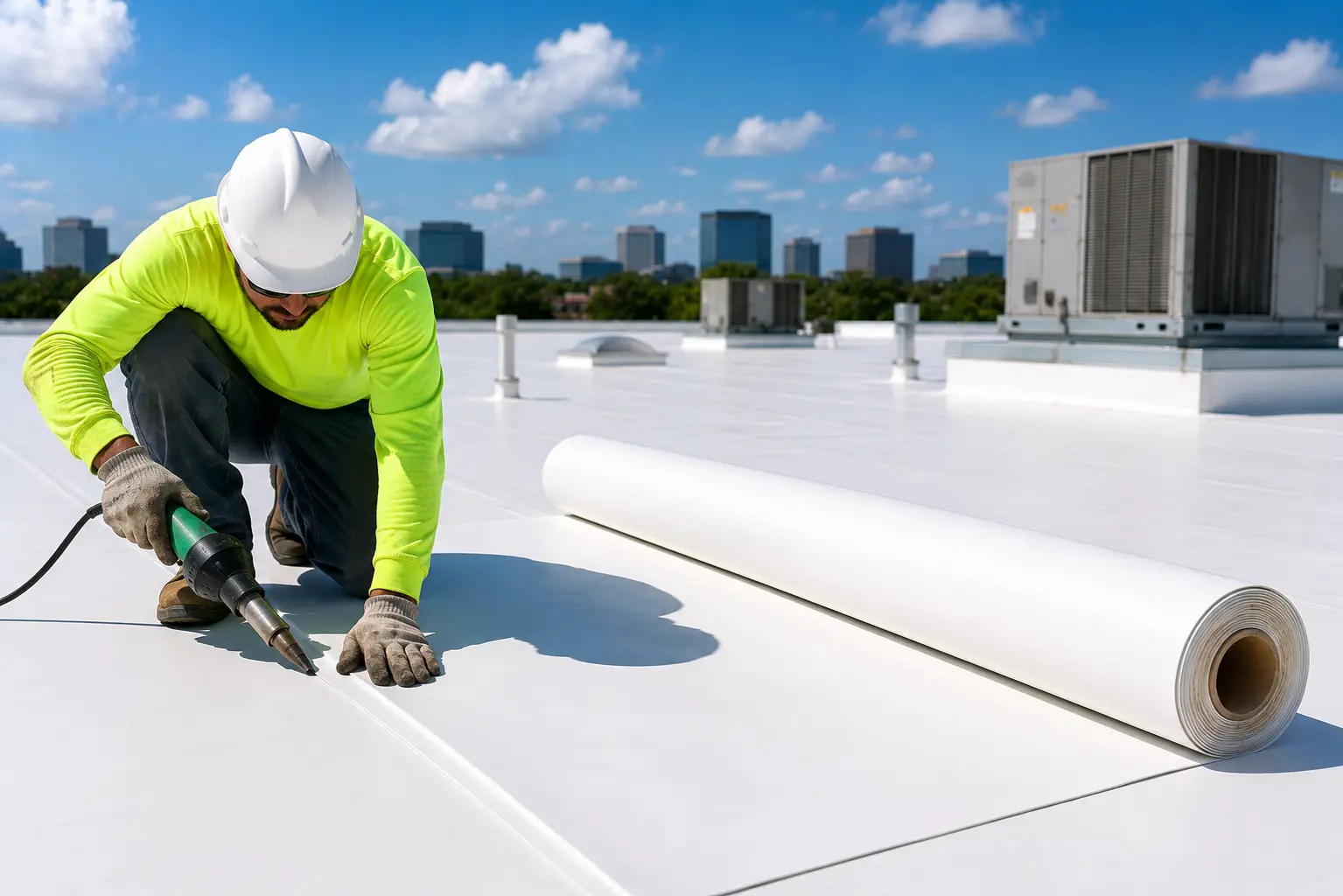
TPO, short for Thermoplastic Polyolefin, is a single-ply flat roof membrane made from polypropylene and ethylene-propylene rubber. The membrane is manufactured in wide rolls, typically 10, 12, or 20 feet with a reinforced polyester scrim that adds strength, dimensional stability, and tear resistance.
Most TPO membrane roofing is available in 45, 60, and 80 mil thicknesses. Thicker membranes generally provide better puncture resistance and can deliver a longer service life in high-traffic commercial applications.
One reason TPO has become so popular is its reflective white surface. By bouncing more sunlight away from the building instead of absorbing it, a TPO roof system helps reduce rooftop temperatures and can lower cooling costs in Florida’s hot climate.
To ensure consistent quality, major manufacturers design their membranes to meet ASTM D6878, the industry standard for Thermoplastic Polyolefin roofing sheets. That standard covers key performance requirements such as physical properties, weather resistance, and dimensional stability.
You’ll find several well-established TPO membrane brands on the market, including GAF EverGuard, Elevate (Firestone) UltraPly TPO, Johns Manville JM TPO, Carlisle Sure-Weld TPO, and IKO TPO. While all meet the same ASTM standard, they differ in warranty options, membrane formulations, and installed cost.
How TPO Differs from Other Single-Ply Membranes
TPO is a thermoplastic membrane, which means installers fuse the seams together with hot air. Done correctly, those heat-welded seams become one continuous bond and are typically stronger than adhesive-based joints.
EPDM works differently. It’s a thermoset rubber membrane, so seams rely on adhesives or seam tape instead of heat welding. A properly installed EPDM roof performs well, but adhesive seams are generally more vulnerable to installation errors and long-term aging than welded seams.
PVC is TPO’s closest competitor. Both use heat-welded seams, but PVC offers better resistance to grease, oils, and harsh chemicals, making it a strong fit for restaurants and industrial facilities. TPO, on the other hand, contains no chlorine, usually costs less to install, and delivers excellent energy performance for many commercial buildings.
There’s no universal best flat roof membrane. The right choice depends on how the building is used, the local climate, and your long-term ownership plans. That’s why you’ll see TPO on everything from warehouses and retail centers to office buildings throughout Orlando, Sanford, Daytona, and other parts of Central Florida.
One thing isn’t up for debate: single-ply membranes now account for the majority of new low-slope commercial roof installations because they offer a practical balance of installation speed, durability, and lifecycle value.
The Evolution of TPO Roofing: From Early Failures to Modern Reliability
If you’ve heard someone say, “I’d never install a TPO roof,” there’s a good chance they’re talking about products from the 1990s, not the ones being installed today.
Why Early TPO Roofs Earned a Bad Reputation
The first generation of TPO membranes had real problems. Many developed cracks, lost flexibility, or experienced seam failures after just 5 to 10 years. The biggest issue wasn’t the idea behind TPO; it was the chemistry. Early formulations lacked the UV stabilizers and antioxidants needed to handle years of sun and heat.
Back then, manufacturers were still figuring out the formula, and there wasn’t a consistent industry standard to hold every product to the same level of performance. That’s why some of those early roofs failed much sooner than expected.
What Changed?
The turning point came when ASTM D6878 established minimum performance requirements for TPO membranes. Manufacturers responded by improving their formulations with better polymers, stronger UV protection, and more effective heat stabilizers.
Today’s products also go through independent testing by organizations such as UL and FM Global, verifying performance for weathering, seam strength, fire, and wind resistance before they’re approved for commercial use.
Today’s TPO Isn’t Yesterday’s TPO
Modern TPO is a completely different product than it was 25 years ago. A properly specified, professionally installed, and well-maintained TPO roof can realistically deliver 20 to 30 years of service, putting it in the same conversation as EPDM and PVC for long-term performance.
These days, the membrane is rarely the weak link. Installation quality is. If a contractor skips proper substrate preparation or doesn’t produce consistent heat-welded seams, even the best membrane won’t live up to its warranty.
TPO Roof System Components
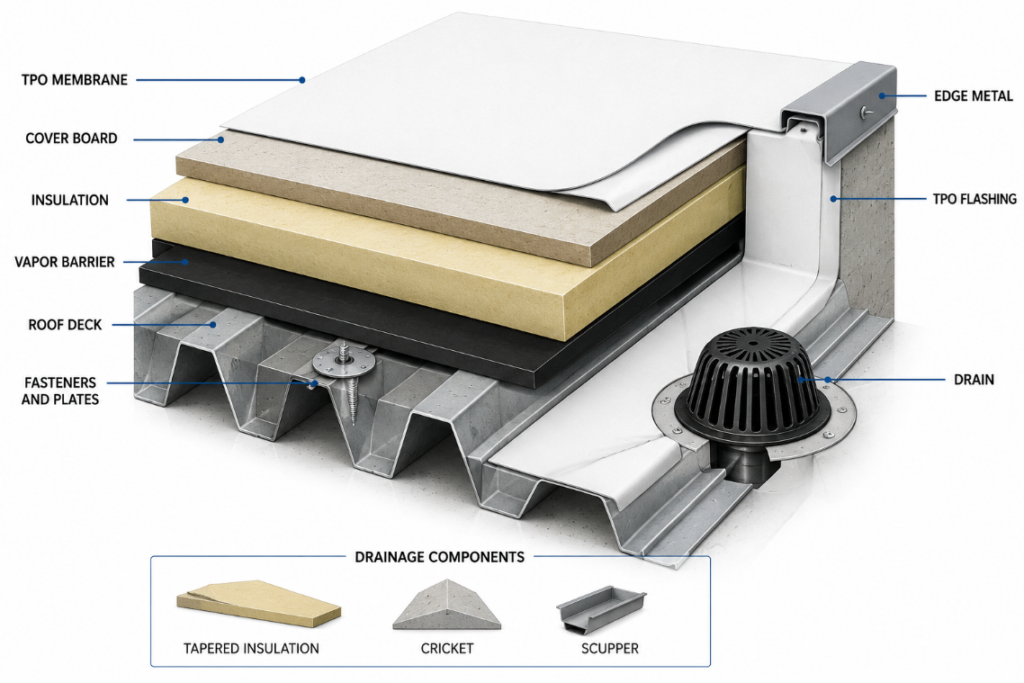
A TPO roof is much more than the white membrane you see from the parking lot. It’s a complete roof system, and every layer underneath affects how well it performs over the next two or three decades.
Membrane Layer
The top layer is the TPO membrane itself. It’s commonly available in white, gray, and tan, with white being the most popular because it reflects more sunlight and helps reduce cooling costs.
Commercial membranes typically come in 45, 60, and 80 mil thicknesses. A 45-mil membrane may lower the upfront price, but it also gives up puncture resistance and longevity. For most commercial buildings, 60 mil should be the minimum. If the roof sees frequent maintenance traffic or supports rooftop equipment, upgrading to 80 mil is usually money well spent.
Insulation and Cover Board
Beneath the membrane sits rigid insulation, usually polyisocyanurate (polyiso), EPS, or XPS. This layer improves energy efficiency while creating a stable base for the membrane.
Many high-quality roof systems also include a cover board made from gypsum, high-density polyiso, or perlite. It adds impact resistance, protects the insulation from foot traffic, and creates a smoother surface for installation. If you’re looking for a roof that lasts longer, this is one upgrade worth considering. A cover board can add 5 to 10 years to the life of the system in many applications.
Fasteners, Adhesives, and Flashing
Not every TPO roof is installed the same way. Depending on the building and wind requirements, the membrane may be mechanically attached with screws and plates, fully adhered with adhesive, or ballasted with stone or pavers.
The details matter just as much as the field membrane. Roof penetrations, curbs, pipes, skylights, and perimeter edges need properly heat-welded TPO flashing. These areas are where leaks usually start if corners are cut.
Edge Metal and Drainage
Edge metal does more than give the roof a finished appearance. It locks the membrane in place and helps the roof system resist Florida’s high winds.
Drainage is equally important. Tapered insulation, crickets, interior drains, and scuppers work together to move water off the roof quickly. Standing water isn’t just an eyesore; it accelerates membrane aging and puts extra stress on the entire roof system.
Before installing a new TPO membrane over an existing roof, ask your contractor to perform an infrared moisture scan. Wet insulation should be identified and replaced first. If moisture is trapped beneath the new membrane, it can lead to blistering, reduced insulation performance, and premature roof failure.
TPO vs. EPDM vs. PVC: Which Flat Roof System Makes the Most Sense?
No single membrane wins every project. The best choice depends on your budget, the building’s use, and what you expect from the roof over the next 20 to 30 years.
| Attribute | TPO | EPDM | PVC |
| Typical Installed Cost* | $5.50–$8.50/sq. ft. | $4.50–$7.50/sq. ft. | $6.50–$10.00/sq. ft. |
| Expected Lifespan | 20–30 years | 20–30 years | 20–30 years |
| UV Resistance | Excellent (reflective surface) | Good (black membrane absorbs heat unless coated) | Excellent |
| Chemical Resistance | Moderate | Good | Excellent |
| Fire Rating | Class A** | Class A** | Class A** |
| Wind Uplift Performance | High with approved attachment system | High with approved attachment system | High with heat-welded seams and approved assembly |
| Energy Efficiency | Excellent | Lower unless a reflective coating or white EPDM is used | Good |
| Seam Installation | Heat-welded | Adhesive or seam tape | Heat-welded |
| Environmental Impact | Recyclable, chlorine-free | Recyclable | Contains chlorine; recycling options are more limited |
What This Comparison Really Means
For most office buildings, warehouses, retail centers, and schools, TPO delivers the best overall value. It strikes a strong balance between upfront cost, energy savings, and durable heat-welded seams, making it the go-to choice for many commercial roofs across Florida.
If keeping the initial budget as low as possible is the priority, EPDM is still a solid option. Just remember that its dark surface absorbs more heat unless you choose a reflective coating or a white EPDM product, and adhesive seams may require more attention as the roof ages.
PVC shines in environments where chemicals, grease, or oils are a concern. That’s why it’s commonly specified for restaurants, food-processing plants, and certain manufacturing facilities. It costs more, but in those situations, the added chemical resistance often justifies the investment.
Note: Installed costs vary by roof size, insulation package, membrane thickness, tear-off requirements, warranty level, and local labor rates. Fire ratings and wind uplift performance depend on the complete roof assembly meeting applicable IBC 2024, manufacturer, and testing requirements, not just the membrane itself.
TPO Roofing Cost Breakdown (2026 Pricing)
For most commercial buildings, a complete TPO roof system costs between $5.50 and $8.50 per square foot installed. That typically includes the membrane, insulation, cover board, accessories, and labor. If you’re pricing the membrane by itself, expect to pay around $1.50 to $3.00 per square foot, depending on the brand and thickness.
Estimated Project Costs
| Building Size | Estimated Installed Cost |
| 5,000 sq. ft. | $27,500–$42,500 |
| 20,000 sq. ft. | $110,000–$170,000 |
| 100,000 sq. ft. | $550,000–$850,000 |
These numbers are starting points, not fixed prices. A warehouse in Orlando may cost differently than an office building in Daytona or Sanford because labor rates, roof layout, and local code requirements all affect the final proposal.
What Has the Biggest Impact on Price?
The largest cost drivers include:
- Membrane thickness (60 mil vs. 80 mil)
- Insulation type and required R-value
- Roof height and accessibility
- Tear-off versus installing over an existing roof
- Warranty length and manufacturer requirements
- Local labor costs and project complexity
Don’t compare bids on price alone. A reflective TPO roof can reduce cooling costs by 10% to 30% in Florida’s climate, making the total cost of ownership much lower over the roof’s lifespan than the initial installation price suggests.
Pricing Benchmark: If you’re comparing proposals, GAF EverGuard TPO is a good reference point. It’s one of the most commonly specified commercial TPO systems and offers a wide range of warranty options, making it useful for comparing both pricing and coverage between contractors.
Pros and Cons of TPO Roofing
No roofing system is perfect, and TPO is no exception. It offers excellent value for many commercial buildings, but it also has a few limitations that are worth understanding before you sign a contract.
What TPO Does Well
- Lower energy bills: Its reflective white surface helps reduce heat absorption, lowering cooling costs and supporting cool roof and LEED goals.
- Strong value for the money: TPO usually costs less than PVC while delivering similar performance for many commercial applications.
- Durable heat-welded seams: Properly welded seams create a watertight bond that’s generally more reliable than adhesive-based seam systems.
- Built for the weather: Modern TPO membranes handle Florida’s intense UV exposure, rain, and high temperatures well.
- Faster installation: Lightweight membranes and wide rolls cover more roof area with fewer seams, helping reduce installation time.
Where TPO Falls Short
- Installation quality matters: Poorly welded seams are one of the biggest reasons TPO roofs fail. Even a premium membrane won’t compensate for bad workmanship.
- Less historical data: EPDM has been around for decades longer, so it has a more established long-term track record.
- Not ideal around chemicals: Restaurants, factories, and facilities exposed to grease, oils, or solvents may be better served by PVC.
- Standing water is a concern: Ponding water that remains for more than 48 hours can speed up membrane aging and may affect some manufacturer warranties if drainage issues aren’t corrected.
Is TPO the Right Choice?
TPO is an excellent fit for low-slope commercial buildings, especially if lowering energy costs and controlling installation budgets are top priorities. It’s commonly used on offices, warehouses, retail centers, schools, and medical buildings throughout Florida.
You may want to consider another system if your roof is regularly exposed to chemicals, suffers from chronic ponding water, or your only goal is achieving the absolute lowest upfront cost. In those situations, PVC or EPDM could be the better investment depending on the building’s needs.
TPO Installation Process
A TPO roof is only as good as the crew installing it. Most premature failures aren’t caused by the membrane; they’re caused by shortcuts during installation.
1. Start with a Dry, Solid Roof Deck
Before the membrane goes down, the roof should be clean, dry, and structurally sound. Any loose materials, damaged insulation, or deteriorated roofing need to be removed first.
Just as important, the contractor should perform a moisture survey using an infrared scanner or similar equipment. Moisture trapped beneath a new membrane can lead to blistering, poor adhesion, and early roof failure. As a rule, the substrate moisture content should be below 5% before installation begins.
Ask for the moisture scan results in writing. A reputable contractor shouldn’t have a problem providing them.
2. Install the Membrane Correctly
TPO membranes can be installed in three ways:
- Mechanically attached using screws and plates for fast, cost-effective installation.
- Fully adhered with adhesive for a smoother appearance and higher wind performance.
- Ballasted with stone or pavers on buildings designed to support the additional weight.
The right method depends on the building, wind requirements, and structural design—not contractor preference alone.
3. Get the Seams Right
Heat-welded seams are one of TPO’s biggest advantages, but only when they’re done correctly. Installers use hot-air welders, typically operating between 600°F and 1,000°F, to fuse overlapping membrane sheets into one continuous waterproof bond.
After welding, every seam should be checked with a probe tool. If the probe catches or the seam separates, it needs to be repaired before the project moves forward.
Never accept adhesive-bonded seams on a TPO roof. Proper heat welding creates a stronger, longer-lasting connection.
4. Finish with a Thorough Inspection
Before the project is signed off, every seam, flashing detail, penetration, and edge termination should be inspected. The contractor should also confirm that drains, scuppers, and tapered insulation are directing water off the roof instead of allowing it to pond after rainfall.
A well-installed TPO roof is built for long-term performance, with every seam, flashing detail, and drainage component finished correctly from the start.
Common TPO Roofing Problems and How to Prevent Them
Most TPO roof failures aren’t caused by the membrane itself. They’re usually the result of poor installation, neglected maintenance, or drainage problems.
Seam Failures
Heat-welded seams are incredibly strong, but only if they’re welded correctly. Wrong temperatures, inconsistent welding speed, or dirty membrane surfaces can all lead to seam separation.
To prevent it, hire manufacturer-certified installers and make sure every seam is probe-tested before the project is complete.
Punctures and Impact Damage
Service technicians, dropped tools, hail, and sharp debris can puncture even a quality membrane.
You can greatly reduce puncture damage by using a cover board, placing walkway pads in high-traffic areas, and scheduling inspections after storms or rooftop service work.
Blistering and Membrane Movement
Blisters usually form when moisture gets trapped beneath the membrane during installation. Improper fastening can also allow the membrane to shift as temperatures change.
Keeping the roof deck below 5% moisture content and following the manufacturer’s fastening requirements helps prevent blistering and unwanted membrane movement.
Ponding Water
TPO performs best when water drains quickly. If water sits on the roof for days, it can shorten the membrane’s lifespan and even affect some warranty coverage.
Prevent ponding water by designing the roof with positive drainage, adding tapered insulation where needed, and keeping drains and scuppers clear of debris.
Chemical and UV Exposure
TPO handles sunlight well, but it’s not the best option where oils, grease, or harsh chemicals are regularly present.
Reduce the risk by choosing PVC for buildings exposed to oils, grease, or harsh chemicals, and inspect TPO roofs regularly so small surface issues are fixed before they become costly repairs.
Ready to Find Out if TPO Is the Right Roof for Your Building?
Choosing the right commercial roof isn’t about picking the most popular membrane. It’s about finding the system that fits your building, your budget, and your long-term goals.
If you’re considering a TPO roof for your property in Orlando, Deltona, Daytona, Kissimmee, Sanford, Port Orange, or the surrounding areas, our team can help. We’ll inspect your roof, explain your options without the sales pitch, and provide a detailed estimate so you can make a confident decision.
Schedule your commercial roof assessment today and get expert guidance designed for your building.